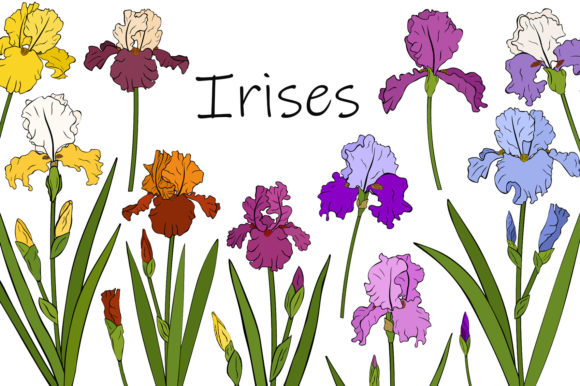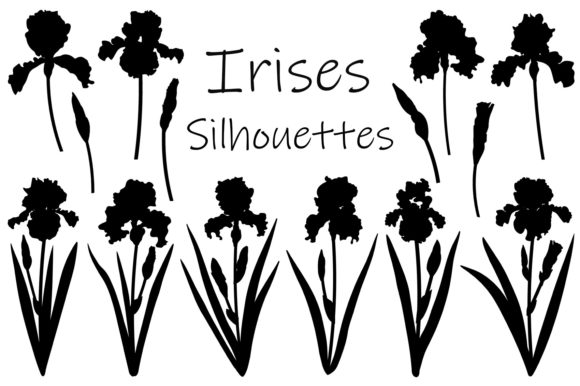
Flowers Irises Silhouettes Vector Review
As a designer who spends half my day staring at stitch charts and the other half worrying about thread tension, I don’t just look at an embroidery file; I look at how it will behave on fabric. When I first pulled up Flowers Irises Silhouettes Vector, my immediate reaction wasn’t about the technical specs—it was about the mood. The silhouette approach is deceptively simple, yet it carries a weight that solid fills often miss. It feels romantic, subtle, and undeniably elegant. But does it hold up when you put it under the needle for a real client project or a busy Etsy shop inventory? That is the question we need to answer before you commit to stitching.
The First Impression: Mood and Visual Personality
Irises are inherently graceful flowers, with their sweeping petals and vertical lines. By rendering them as silhouettes in this Illustrations category Graphics asset, the design strips away the complexity of individual petal veins and focuses on shape and flow. This creates a clean, modern aesthetic that works beautifully for both minimalist home decor and high-end boutique branding. The visual personality here is quiet confidence. It doesn’t shout; it invites the viewer to lean in closer. For an embroidery project aiming for a "handmade product" feel, this design strikes the right balance between professional polish and artisan charm.
This vector-based source offers incredible flexibility. Because it starts as a vector, you have control over scaling without losing edge clarity, which is crucial when adapting a machine embroidery design for different garment sizes. Whether you are planning a large chest placement on a sweatshirt or a delicate detail on a baby onesie, the foundation is solid.
Real-World Application: Where This Design Shines
I recently considered using Flowers Irises Silhouettes Vector for a custom order—a set of personalized linen tea towels for a bride’s shower. The scenario required something timeless that wouldn’t clash with floral table linens but would still stand out as a distinct gift item. Here is how this design performed in my mental mockup:
- Tea Towels and Kitchen Linens: The vertical nature of iris stems aligns perfectly with the long, narrow format of kitchen towels. A single stemmed iris or a small cluster near the hem creates a sophisticated touch without overwhelming the utility of the item.
- Baby Embroidery: For nursery decor or baby clothes, the soft, organic curves of the irises are gentle and soothing. It avoids the cluttered look of dense fill stitches, making it ideal for sensitive skin and delicate fabrics. It translates well into a personalized gift where names might be integrated alongside the flower motif.
- Tote Bag Design: A bold silhouette looks striking on canvas or cotton tote bags. It provides enough contrast to be readable from a distance, which is essential for brand visibility if you are using these bags for promotional purposes or as part of your craft business packaging.
- Wedding and Holiday Gifts: Irises often symbolize faith, hope, and wisdom. In the context of holiday embroidery or wedding favors, this design adds a layer of meaning that customers appreciate. It feels intentional, not just decorative.
When you think about Etsy seller listings or small shop product catalogs, versatility is key. This design bridges the gap between seasonal decor and year-round apparel, giving you more opportunities to list it across different categories.
Technical Considerations and Stitch Behavior
While the vector art is beautiful, embroidery is a mechanical process. Converting a silhouette into stitches requires careful attention to stitch density and thread colors. A silhouette can easily become a "blob" if the fill stitch is too dense or if the thread color lacks contrast against the fabric.
Stitch Type Strategy:
- Satin Stitch Outlines: To maintain the crispness of the silhouette, consider outlining the shapes with a fine satin stitch. This defines the edges and prevents the fill from bleeding into adjacent areas.
- Fill vs. Running Stitch: Depending on the size, a full fill stitch might be heavy. For larger pieces, a combination of light fill and running stitch details can add texture without adding bulk. For smaller applications like an embroidered patch or cap front, a dense fill might be necessary to ensure opacity, but watch out for puckering.
- Thread Colors: Monochromatic schemes work exceptionally well with silhouettes. Using a dark navy iris on white linen, or a dusty rose iris on charcoal gray, enhances the subtlety. Avoid overly bright, neon threads unless you are going for a very specific pop-art look, as they can detract from the romantic mood.
Where to Use With Caution
No design is perfect for every surface. As you plan your production run, keep these limitations in mind regarding Flowers Irises Silhouettes Vector:
- Small Hoop Sizes: If you are working in hoops smaller than 4x4 inches, the details of the iris leaves may get lost or merged together. Test this thoroughly before committing to small accessories like hair clips or tiny patches.
- Textured and Stretchy Fabrics: While linen and cotton are forgiving, stretchy knits (like standard t-shirt jersey) can distort delicate silhouettes if not stabilized correctly. You must use a proper stabilizer—likely a cut-away for stability—to prevent the design from warping during washing.
- Dense Stitch Areas: If the silhouette includes intricate overlapping leaves, ensure the digitizer has balanced the stitch direction. Uneven tension in dense areas can lead to thread breaks or visible fabric showing through.
- Curved Surfaces: Applying this to caps or curved hat fronts requires careful hooping techniques. The flat vector layout needs to be mapped correctly to the curve so the irises don’t look stretched or squashed.
Practical Designer Notes for Success
Before you upload this digital embroidery file to your machine or sell it as a design asset, follow these steps to ensure quality:
1. Mockup in Black and White: Convert the design to grayscale to check the balance. Does any part look too heavy? Is there enough negative space? This helps you visualize the final impact without being distracted by color choices.
2. Fabric Contrast Test: Always test your chosen thread colors on the actual fabric you plan to use. A light gray thread on a cream shirt might disappear, while the same thread on black will pop. Check whether the design works for both light and dark fabric backgrounds if you intend to offer multiple options.
3. Stabilizer Selection: The choice of stabilizer is just as important as the design itself. For woven fabrics like aprons or pillow covers, a tear-away might suffice for light designs, but for heavier items or frequent washing, a cut-away is safer. For custom apparel like sweatshirts, always use a stabilizer to prevent stretching.
4. Licensing and Commercial Use: Since you are likely using this for a commercial embroidery venture or selling finished goods, double-check the license terms provided with the Flowers Irises Silhouettes Vector. Ensure you have the right to sell physical items made from the design. Some licenses restrict the number of units or require attribution.
Final Verdict
Flowers Irises Silhouettes Vector is a strong candidate for designers looking to add a touch of elegance to their portfolio. It is versatile enough for apparel decorators creating custom apparel and detailed enough for creative entrepreneurs building a cohesive brand identity. Its strength lies in its simplicity and adaptability. By paying attention to stitch density, thread contrast, and fabric choice, you can transform this digital graphic into a stunning finished product that customers will love. Just remember to test on scrap fabric first, confirm your hoop size, and let the natural beauty of the iris guide your creative decisions.