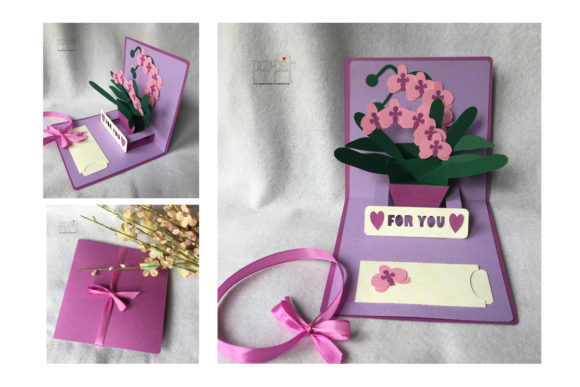
Pop Up Orchids: A Designer's Real-World Embroidery Review
As a professional designer who has spent years testing digital assets for real-world embroidery projects, I often find myself skeptical of flashy product titles. When I first encountered Pop Up Orchids, my initial reaction was cautious. The description mentions it is a 3D SVG file suitable for electronic cutting machines, yet the visual promise of orchids suggests a delicate, organic complexity that doesn't always translate well to thread. My goal here is not to simply list features, but to walk you through exactly how this design behaves when it moves from a screen to a hoop, and whether it deserves a spot in your next handmade product line or client project.
The First Impression: Mood and Visual Personality
The moment you open the files for Pop Up Orchids, the design exudes a specific mood: elegant, celebratory, and undeniably feminine. Unlike generic floral patterns that rely on heavy fill stitches, this design leans into the natural curvature of orchid blooms. It feels less like a static image and more like an invitation to create something tactile. For designers looking to add a touch of sophistication to their inventory, this design offers a distinct personality. It isn't trying to be bold or edgy; instead, it aims for timeless grace.
However, there is a nuance to consider. The "Pop Up" aspect implies depth, which is challenging to achieve with standard machine embroidery. While the design is marketed as a 3D SVG, in the realm of stitching, true dimensionality requires careful planning. Does the layout encourage layering? Are the petals distinct enough to stand out against the fabric texture? In its current form, Pop Up Orchids feels best suited for projects where the focus is on softness and detail rather than structural rigidity. It creates a sense of luxury that can elevate even the simplest canvas, provided the execution is precise.
Real-Life Application: From Screen to Stitch
Let's imagine a practical scenario. You are preparing a custom gift for a boutique client who specializes in Mother's Day collections. You need a design that works on a high-quality tote bag, perhaps made of sturdy cotton canvas, but you also want to ensure it looks good on a softer baby onesie. This is where Pop Up Orchids gets tested. If you were to stitch this onto a tote bag, the clean lines of the orchid would likely hold up well against the coarse weave of the fabric, creating a striking contrast.
Consider the versatility of this embroidery file. It could easily transition from a holiday embroidery piece for Christmas stockings to a personalized gift for a bridal shower. The elegance of the orchid theme makes it universally appealing, reducing the risk of it feeling too niche. However, if you plan to use this for commercial embroidery on items like sweatshirts or aprons, you must think about the placement. On a curved surface like a cap, the organic flow of the flowers might distort slightly if the digitization doesn't account for the tension of the hat crown.
For small business owners and Etsy sellers, the potential value of Pop Up Orchids lies in its ability to serve as a premium design asset. When customers see a finished product featuring these intricate blooms, they perceive higher quality. It signals that the maker put thought into the details. Whether you are creating an embroidered patch for a denim jacket or adding a decorative accent to a pillow cover, this design has the visual weight to justify a higher price point. It transforms a mass-produced item into a bespoke creation.
Navigating Technical Challenges and Fabric Choices
While the aesthetic appeal is clear, every experienced designer knows that beauty in embroidery is dictated by technical constraints. There are specific scenarios where Pop Up Orchids requires careful handling. If you are working with thin fabric or stretchy materials like jersey knit, the density of the stitches might cause puckering. The design appears to have areas that require significant coverage, which means you cannot simply slap it on a flimsy tea towel without reinforcing it properly.
Texture is another critical factor. On a highly textured fabric, such as a chunky wool blanket or a bouclé throw, the fine details of the orchid petals might get lost. The stitches could struggle to penetrate deep into the pile, resulting in a muddy appearance. Similarly, if you attempt this design on dark fabric without using a high-quality underlay or a contrasting thread color, the definition of the petals will vanish. The interplay between thread colors and the background fabric is paramount for this specific motif.
Hoop size is also a limiting variable. If your design includes very small details or tiny lettering (if any), a small hoop might force you to break down the stitch sequence unnecessarily, leading to visible jump stitches or misalignment. Always verify the hoop size requirements before committing to a production run. Furthermore, on dense stitch areas, the fabric may become stiff. This is acceptable for a wall hanging or a framed piece, but it might be uncomfortable for an item worn close to the skin, such as a baby garment or a shirt collar.
Visual Appeal and Customer Trust
In the world of handmade products, presentation is everything. A well-executed embroidery project builds trust with your buyers. When a customer receives a gift featuring Pop Up Orchids, they are reacting to the craftsmanship as much as the flower itself. If the satin stitch is smooth and the fill stitch is even, the buyer assumes the entire product is high quality. Conversely, skipped stitches or loose threads can undermine the perceived value of the entire item.
This design is particularly effective for enhancing brand consistency. If your shop focuses on nature-inspired or botanical themes, incorporating Pop Up Orchids reinforces your identity. It helps in creating a cohesive look across different product lines, from printable mockups used in marketing to the actual finished goods sold at craft fairs. The design acts as a visual anchor that draws the eye and invites engagement. It tells a story of care and attention to detail, which is exactly what modern consumers are looking for in a handmade product.
Practical Designer Notes for Success
Before you start stitching, there are several non-negotiable steps to ensure success with this file. First and foremost, test the design on scrap fabric. Do not assume that because it looks good on screen, it will stitch perfectly. Check the stitch density carefully. If the design feels too crowded, consider adjusting the settings or simplifying the elements. Review the file structure to confirm it is optimized for your specific machine software.
Inspect small details closely. Are the petal tips sharp enough, or do they merge together? If you are unsure, try printing a black-and-white mockup to see how the shapes interact without the distraction of color. Compare how the design looks on both light and dark backgrounds to determine the best thread palette. Using the proper stabilizer is essential to prevent distortion, especially if you are working on stretchy fabrics or large garments.
Finally, confirm your licensing terms. As a digital product seller, you need to know if you are allowed to sell finished items made with Pop Up Orchids or if the license restricts commercial use. Understanding these terms protects your craft business from legal issues. Whether you are a hobbyist making a one-off gift or a seasoned entrepreneur scaling your operations, taking the time to validate these details ensures that your investment in the design pays off in a beautiful, durable, and professional finished product.